
Disclosure: This guide is published by Mariden Resort. While we've aimed for accuracy, we encourage you to research both areas for your trip.
Siargao is the undisputed surf capital of the Philippines . Cloud 9 (the island's most famous break) has hosted international WSL qualifying events and remains one of Asia's most photographed waves. But Siargao surfing is far more than one wave: there are at least seven distinct breaks spread across the island, from beginner-friendly whitewash at Daku Island to the heavy reef slabs of Jacking Horse. Whether you're paddling out for the first time or chasing serious barrels, this guide covers every surf spot, the seasonal conditions, how to match breaks to your ability level, and all the practical information you need before you hit the water.
⚠️ Important Safety Notice
Mariden Resort and Homestay Siargao accepts no liability for any injury, accident, or fatality arising from surfing activities in Siargao. Siargao's reef breaks are powerful and unforgiving. Wipeouts over shallow coral reefs and strong rip currents have caused serious injuries on the island.
Beginner surfers must use an instructor accredited by the Siargao Island Surfing Association (SISA) before entering the lineup at any reef break. SISA-accredited instructors teach at safe, beginner-appropriate spots and will not send you to breaks beyond your ability level. Do not attempt Cloud 9, Jacking Horse, or Quicksilver without prior surfing experience and local guidance. If you are unsure which break suits your level, ask your instructor before paddling out.
Siargao Surf Season: When to Come and What to Expect
Understanding Siargao's seasonal swells is the single most important factor in planning a surf trip. Water temperature stays warm year-round (27–30°C / 80–86°F) so you'll never need a wetsuit, but wave quality, size, and consistency vary significantly across the calendar. For a month-by-month breakdown of Siargao's weather patterns, see our guide to Siargao surf season by month .
🌊 Peak Surf Season: August – November
This is the window when Siargao earns its reputation. The southwest monsoon ( habagat ) pushes consistent south and southwest swells into General Luna's breaks, and as the season progresses into October–November, northeast groundswells begin stacking on top. Cloud 9 regularly sees 6–10-foot face height during this period, with larger cleanup sets reaching double overhead. Professional surfers time their visits around this window, and the WSL has held qualifying series events here during peak season.
This is also the rainiest period and the core of typhoon season. Most typhoons track north of Siargao, but it's worth monitoring forecasts during September and October. The trade-off (more consistent, larger surf) is usually worth it for committed surfers.
🌤️ Shoulder Season: March – May
Southeast swells from the Banda Sea light up the north coast breaks (particularly Pacifico/Big Wish), while Cloud 9 and the GL spots can be smaller and more variable. This is a good time for intermediate surfers who want uncrowded conditions, and it overlaps with Siargao's dry season, making it ideal if you want to combine surfing with other activities. The north coast orientation of Big Wish means it picks up swells that the south-facing GL breaks miss entirely.
🌬️ December – February
This period is more variable and often smaller. Northeast swells can deliver solid surf at GL, but consistency is lower and flat spells of 3–5 days are common. December holiday crowds mean accommodation prices peak even when the waves aren't. If you're primarily a surfer, this is the least reliable window. If you're combining surf with relaxation or non-surf activities, the drier, calmer conditions are actually pleasant.
Surf Forecast Apps: Use Surfline, Magic Seaweed (MSW), or Windguru to check swell period, height, and wind direction before your trip. A 12-second+ swell period with offshore northeast winds is the ideal forecast signature for Cloud 9.
Skill Level Quick Reference
Before choosing a break, be honest about your level. Siargao's reef breaks are unforgiving, and a fall in the wrong conditions means coral, not sand.
| Level | Description | Recommended Breaks |
|---|---|---|
| Beginner | First-timer or fewer than 10 sessions. Cannot consistently pop up independently. | Stimpys (GL), Daku Island (with instructor) |
| Intermediate | Can pop up reliably, ride the wave face, perform basic turns. Comfortable in 2–4 ft surf. | Rock Island, Quicksilver, Stimpys, Pacifico (calmer days) |
| Advanced | Comfortable duck-diving, reading lineups, surfing 4–6 ft reef breaks confidently. | Cloud 9 (2–5 ft), Quicksilver, Pacifico/Big Wish, Rock Island (bigger days) |
| Expert | Experienced big-wave surfer, tube riding, strong paddle fitness. Ready for 6+ ft reef. | Cloud 9 (6+ ft), Jacking Horse, Quicksilver (bigger days) |
All Siargao Surf Spots — Complete Guide
Here's every major break on the island, with honest assessments of difficulty, crowd levels, and the conditions each spot needs to work.
☁️ Cloud 9 — General Luna
- Type: Right-hand reef break
- Skill Level: Intermediate to Expert (not for beginners)
- Best Swell: South to southwest, 3–8 feet
- Best Wind: Offshore northeast (mornings are cleanest)
- Crowd Level: High, world-famous, draws pros year-round
- Platform Access Fee: ₱50 (~$0.75 USD) per visit
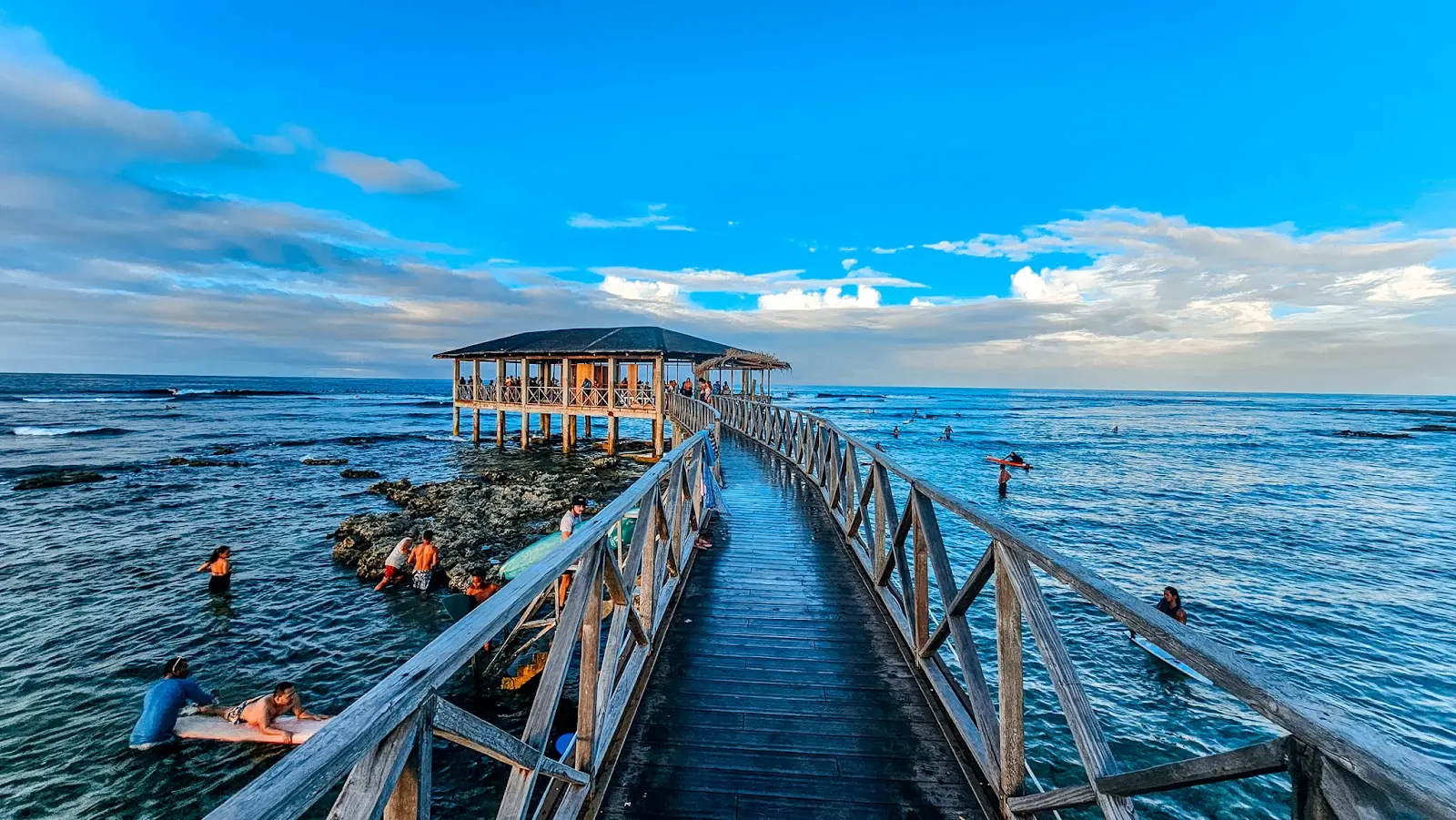
Cloud 9 is what put Siargao on the global surf map. Named for the mood it induces, this hollow right-hander peels over a shallow coral reef producing powerful, barreling sections that can run 50–150 meters on a good day. The signature section, a thick, square lip that throws out over a shallow shelf, is what appears in every surf magazine photo from the island.
At 3–5 feet it's manageable for confident intermediates with solid paddle technique. At 6+ feet it becomes a serious challenge: heavy lips, fast walls, and a crowd of experienced surfers competing for every set wave. The famous rickety wooden observation boardwalk above the break is where non-surfers gather to watch, and it's worth the ₱50 (~$0.75 USD) platform fee even if you're not paddling out.
Paddling out: Time your entry through the channel to the right of the break. Don't paddle through the impact zone. Duck-dive early and consistently if caught inside. Beginners should not attempt Cloud 9. The reef is shallow and unforgiving.
🐴 Jacking Horse — General Luna
- Type: Right-hand reef break
- Skill Level: Advanced to Expert only
- Best Swell: Southwest, 4–8 feet
- Crowd Level: Moderate (self-selecting; only confident surfers attempt it)
Jacking Horse sits adjacent to Cloud 9 and works on a similar southwest swell, but breaks on a different reef section with a more aggressive personality. The name describes its behavior: the wave jacks rapidly on takeoff, demanding an immediate, committed drop with no time to hesitate. This is a heavy, punchy break that rewards surfers who can handle late takeoffs and fast tube sections, and punishes those who can't. Do not paddle out here on a whim.
⚡ Quicksilver — General Luna
- Type: Right-hand point/reef break
- Skill Level: Intermediate to Advanced
- Best Swell: South-southwest, 3–6 feet
- Crowd Level: Moderate, less trafficked than Cloud 9
Quicksilver is a longer, more workable wave than Cloud 9. Rather than the pure tube-hunting conditions of Cloud 9, Quicksilver gives surfers room for maneuvers: cutbacks, roundhouses, and floaters on the shoulder. It handles a wider swell window and is less crowded because it sits further from the main Cloud 9 access path. On a 4-foot day, it's often one of the best waves on the island for progressive intermediate surfing.
🪨 Rock Island — General Luna Area
- Type: Right-hand reef break
- Skill Level: Intermediate
- Best Swell: South, 2–5 feet
- Crowd Level: Moderate
Rock Island is a consistent, more forgiving break than Cloud 9 and is often where intermediate surfers session when Cloud 9 is too crowded or too big. At 2–4 feet it produces clean, sectiony walls ideal for practicing carves and cutbacks. A good confidence-builder before stepping up to Cloud 9.
🌊 Stimpys — General Luna
- Type: Right-hand point break (soft/mushy)
- Skill Level: Beginner to Intermediate
- Best Swell: South, 1–4 feet
- Crowd Level: Higher (surf schools operate here)
Stimpys is the go-to beginner surf spot in General Luna. It breaks on a more forgiving bottom with slower, more predictable waves, giving first-timers the time and space to practice popping up and riding whitewater before tackling harder reef breaks. Many SISA-certified surf schools operate in this area. If you're taking your first lessons in GL, this is almost certainly where you'll begin.
🏝️ Daku Island — 30 Minutes by Boat from General Luna
- Type: Beach/reef break
- Skill Level: Absolute Beginner
- Best for: First-timers, whitewash practice
- Access: Boat from General Luna (~₱150–200, ~$3 USD, each way, or part of a day tour)
Daku Island is one of the three islands visited on the Siargao Tri-Island Tour , but it also serves as a popular beginner surf area with slowly breaking waves and a beautiful beach. Many surf schools bring first-timers here for introductory sessions in a forgiving, low-pressure environment. If you have no surfing experience at all and want your first taste, Daku is the gentlest entry point.
🤙 Pacifico Beach / Big Wish — North Siargao
- Type: Left-hand reef break
- Skill Level: Intermediate to Advanced
- Best Swell: North to northeast (peak season), southeast swells (March–May)
- Crowd Level: Low, significantly less crowded than GL breaks
- Distance from Del Carmen: 45–60 minutes by motorbike
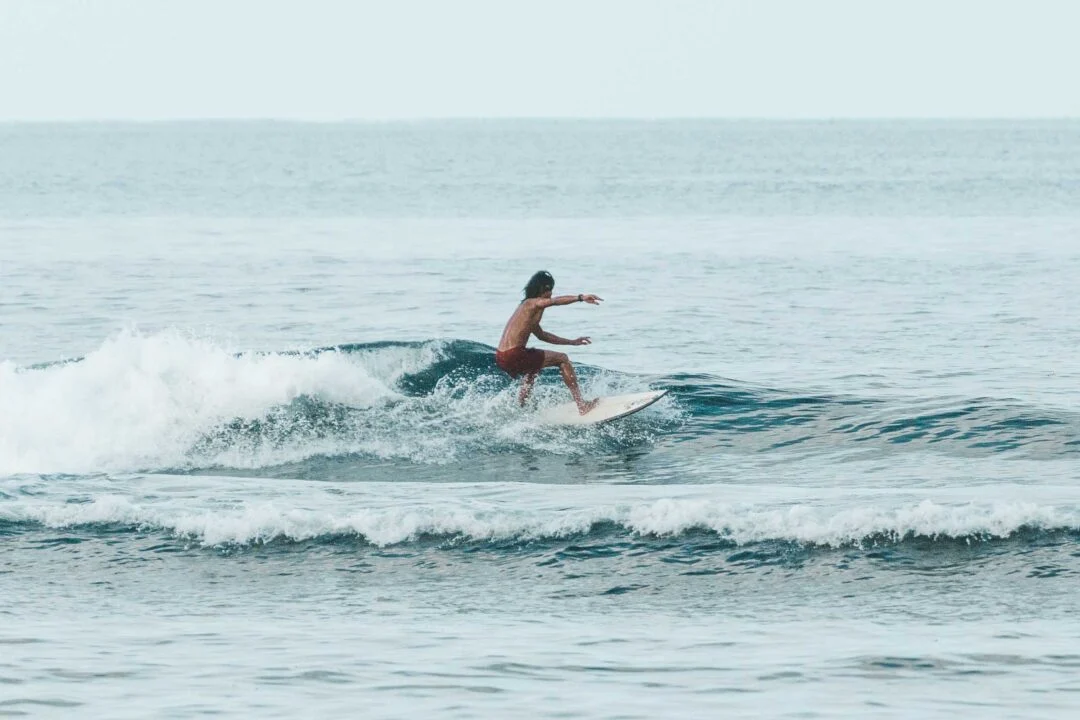
Big Wish is the standout break of northern Siargao and the reason serious intermediate surfers make the ride north. It's a long, powerful left-hand reef break , rare in Siargao where most breaks peel right, producing cleaner face and more consistent walls than many GL spots. Its north-facing orientation means it picks up north and northeast swells that the south-facing GL breaks completely miss, and southeast swells in March–May can produce beautiful conditions here while GL is flat.
For everything about this spot including how to get there, entry, and what to expect: see our dedicated guide to Pacifico's uncrowded left-hand reef break .
Del Carmen Advantage: Pacifico Beach is 45–60 minutes from Del Carmen, roughly the same distance as driving from General Luna. Staying in Del Carmen puts you equidistant from both the north coast breaks (Pacifico) and the GL surf zone, letting you follow the swell rather than committing to one zone.
Surf Lessons in Siargao — What to Expect & What to Pay
SISA (Siargao Island Surfing Association) is the island's governing body for surf instruction. SISA-certified instructors have been trained in water safety, teaching methodology, and appropriate ocean behavior. When booking a lesson, always ask if the instructor is SISA-certified. It's your primary quality indicator.
Lesson Formats and Typical Prices (2026)
| Lesson Type | Cost (PHP) | Cost (USD) | Duration | Best For |
|---|---|---|---|---|
| Group Lesson (4–8 students) | ₱500–800/person | ~$9–14 | 1.5–2 hours | First-timers, social learners |
| Private Lesson | ₱1,000–1,500 | ~$18–27 | 1.5–2 hours | Faster progression, specific goals |
| Multi-Day Package (3–5 days) | ₱2,500–5,000 | ~$45–90 | 3–5 sessions | Committed beginners wanting solid foundation |
Board use is always included in lesson prices. Helmets are recommended for beginners and should be provided by the school. Lessons typically start on land: paddling technique, body positioning, and pop-up practice on the sand. You'll then move into the water at the whitewash zone where your instructor guides you onto broken waves before transitioning to the open face.
Where to book: Surf schools are clustered near Cloud 9 and along the GL main street. Walk-in booking is common during peak season, but during busy periods (August–October), schools can fill up. Book one day in advance if possible.
Board Rental — Prices and What to Rent
If you already know how to surf, board rental is the most cost-effective option. Rental shops are concentrated near Cloud 9 in GL. Board rental typically includes a leash; wax is usually extra (₱50–100 per bar, ~$0.85-$1.70 USD, available locally).
| Board Type | Best For | Daily Rate (PHP) | Daily Rate (USD) |
|---|---|---|---|
| Foam/Soft-top Longboard | Beginners, small surf | ₱300–400 | ~$5–7 |
| Fiberglass Longboard | Intermediate, noseriding | ₱400–500 | ~$7–9 |
| Fish / Mid-length | Intermediate, fun in smaller surf | ₱500–600 | ~$9–11 |
| Shortboard | Advanced, performance surfing | ₱600–700 | ~$11–12 |
| Gun | Expert, 6+ ft surf | ₱700–1,000 | ~$12–18 |
Tip for north coast days: Board rental options near Pacifico are very limited. If you're planning a Pacifico surf day from Del Carmen, rent your board in GL or Dapa the day before, or confirm in advance whether your accommodation or a local rental shop can set you up. For complete daily cost estimates including lessons and board rental, see our Siargao daily cost breakdown .
Surf Etiquette — The Unwritten Rules
Siargao's surf culture is tight-knit and its local surfers are part of a community that has surfed these breaks for decades. Breaking etiquette doesn't just earn you dirty looks. It endangers other people and disrupts the rhythm of the lineup.
Right of Way
- The surfer closest to the peak (the breaking part of the wave) has priority.
- If two surfers are in similar position, the one who has been waiting longer typically gets priority.
- Never drop in: Paddling onto a wave already being ridden is the most serious etiquette violation. It's dangerous and universally disrespected.
- No snaking: Repeatedly paddling around other surfers to improve your position in the queue is frowned upon.
Paddling Out
- Paddle wide around the lineup, never through the impact zone where surfers are riding.
- If caught inside during a set, duck-dive early and consistently; don't let your board go toward other surfers.
- Longboards and foam boards are hard to control in the impact zone and can injure others. Be extra aware of your board's path.
Respect Locals
- Siargao's local surfers have been surfing these breaks for years. Give them respect and acknowledge their priority in the lineup.
- A friendly attitude goes a long way: say hello, share waves, and don't hog the peak.
- Don't paddle out to Cloud 9 if you're not at the skill level for it. Over-confident beginners create hazards for everyone.
Call Your Waves
At busy breaks like Cloud 9, calling "left" or "right" as you take off helps others know your intended direction and avoids collisions in the lineup.
Safety in the Water
Reef Cuts
Siargao's waves break over living coral reefs. Wipeouts at shallow reef breaks can result in coral cuts, abrasive injuries that are painful, slow to heal, and prone to infection in tropical conditions. Preventive measures:
- Reef booties: Recommended for Cloud 9, Jacking Horse, and Quicksilver, especially at lower tides
- Rash guards with long sleeves: Protect your arms on shallow falls
- Zinc-based sunscreen: Protects skin on the back of your hands (commonly grazed)
- Carry antiseptic and reef bandages: Treat any reef cuts promptly and keep them clean
Rip Currents
Strong rip currents can develop between breaks, near channel exits, and along rocky shorelines. If caught in a rip: don't panic, don't fight it directly. Paddle parallel to the shore (perpendicular to the rip's pull) until you're clear of it, then angle back toward the beach. Rips in Siargao are often strongest after large sets.
Sun Exposure
Siargao sits at approximately 10°N latitude, close enough to the equator that UV exposure is intense. Apply SPF 50+ reef-safe sunscreen (mineral/physical formula with zinc oxide or titanium dioxide) at least 20 minutes before entering the water and reapply every 2 hours. Standard chemical sunscreens are harmful to coral and marine life. Always use reef-safe brands at Siargao's reef breaks. Reef-safe options are available in GL surf shops but bring them from home to ensure availability.
Know Your Limits
If conditions look bigger, faster, or more powerful than you're comfortable with, don't paddle out to prove something. Siargao's reefs are unforgiving, and medical facilities on the island are limited; a serious emergency requiring surgery means a multi-hour journey to Surigao City or Davao. Pride is not worth a reef injury.
What to Bring for a Surf Session
See our complete Siargao packing list for the full surf gear checklist, including reef-safe sunscreen brands and electronics advice.
Essentials
- ☑️ Reef-safe sunscreen (SPF 50+): Non-negotiable on coral reef breaks
- ☑️ Rash guard or surf shirt: Long sleeve for extended sessions
- ☑️ Board shorts / surf bikini: Quick-dry, secure fit
- ☑️ Cash: For board rental, lessons, water, snacks (₱300–1,500, ~$5-$25 USD, depending on what you need)
- ☑️ Water bottle: Stay hydrated in tropical heat
- ☑️ Reef booties: Recommended for reef breaks above 3 feet
- ☑️ Leash: Usually included with rental
Optional but Recommended
- 🎥 Waterproof action camera (GoPro-style): Helmet or chest mount
- 🕶️ Post-surf UV sunglasses: Important after hours in reflected ocean light
- 🧴 Antiseptic and reef bandages: For reef cuts
- 🎧 Surf earplugs: For regular surfers to prevent surfer's ear
Frequently Asked Questions
Cloud 9 is Siargao's most famous surf break, a powerful right-hand reef break in General Luna that has hosted international WSL qualifying events. It produces hollow, barreling waves best suited to intermediate and advanced surfers. At 3–5 feet it's manageable for strong intermediates; at 6+ feet it's a serious challenge. There is a small wooden observation boardwalk above the break with a ₱50 (~$0.75 USD) access fee for spectators.
The peak surf season runs August through November , when southwest monsoon swells and approaching northeast swells combine to produce powerful, consistent waves at Cloud 9 and General Luna. March to May brings southeast swells that light up the north coast breaks like Pacifico/Big Wish. December to February is the most variable period. See our guide to Siargao surf season by month for a complete breakdown.
SISA-certified group surf lessons cost approximately ₱500–800 per person (~$9–14 USD) for a 1.5–2 hour session including board use. Private lessons run ₱1,000–1,500 (~$18–27 USD) per session. Multi-day beginner packages (3–5 sessions) are also available at many schools for ₱2,500–5,000 (~$42-$85 USD).
Stimpys in General Luna is the most popular beginner spot, offering slower, more forgiving waves on a softer bottom. Daku Island (reached by boat from GL) is also excellent for absolute first-timers. Both locations host SISA-certified surf school sessions for introductory lessons.
No. Cloud 9 is not suitable for beginners. It breaks over a shallow coral reef, requires confident paddling, duck-diving, and pop-up technique, and the waves are powerful enough to cause serious reef injuries if you fall without preparation. Beginners should start at Stimpys or Daku Island and build up over several sessions.
Board rental in the General Luna area costs approximately ₱300–400/day (~$5-$7 USD) for foam longboards , ₱400–500 (~$7-$8 USD) for fiberglass longboards, ₱500–700 (~$8-$12 USD) for fish and shortboards , and ₱700–1,000 (~$12-$17 USD) for guns on bigger swell days. Leashes are typically included; wax costs ₱50–100 (~$0.85-$1.70 USD) per bar.
Base in Del Carmen for surf and non-surf days
Not every day is a surf day — and not everyone in your group surfs. Del Carmen puts you within reach of Cloud 9 (45-min day trip), Pacifico/Big Wish (similar distance), and all the non-surf highlights. Mariden Resort: rooms from ₱1,500/night (~$26 USD), airport pickup (₱200, bookings of 7+ nights, tricycle only).
Book direct with code DIRECT10 for 10% off.
Explore Our RoomsRelated Guides
Surf & Beach:
- Pacifico Beach & Big Wish guide North Siargao's uncrowded left-hand reef break
- Tri-Island Tour Visit Daku Island for beginner surf and island hopping
- Alegria Beach Family-friendly beach with calm swimming
- Secret Beach Hidden lagoon near General Luna
Planning Your Trip:
- Best Time to Visit Siargao Surf season by month, weather patterns
- Siargao Packing List What to bring for surf days and beyond
- Siargao Budget Guide Daily cost breakdown including surf costs
- Getting Around Siargao How to reach GL from Del Carmen
- Del Carmen vs General Luna Choosing your base for surf trips
- Siargao Airport Guide Arrivals and first-night strategy