
Disclosure: This guide is published by Mariden Resort. While we've aimed for accuracy, we encourage you to research both areas for your trip.
Siargao has undergone a quiet culinary transformation. From a small fishing community where the only food option was whatever the morning catch brought in, the island now offers a diverse food scene: traditional Filipino cooking over charcoal, wood-fired pizzas, specialty single-origin coffee, fresh tuna kinilaw in coconut milk, and international menus that would feel at home in any Asian capital. But the island hasn't lost its roots. In Del Carmen, in Dapa, and in the back streets of General Luna, you can still eat extremely well for ₱150 (~$3 USD) a meal , if you know where to look and what to order.
Must-Try Local Food in Siargao
Before exploring where to eat, know what to eat. These are the dishes that define Siargao's food identity, some uniquely local, some pan-Filipino prepared exceptionally well here because of the island's incredible seafood.
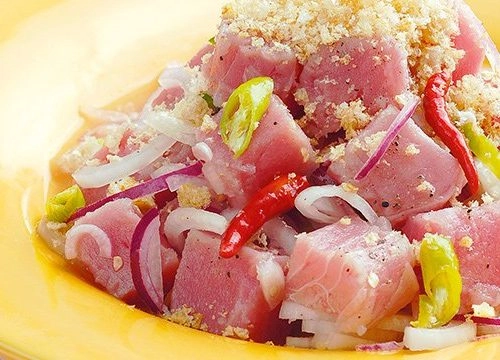
Image courtesy of Yummy Ph
🐟 Kinilaw — Siargao's Essential Dish
Kinilaw is the Filipino equivalent of ceviche: raw fish, typically freshly caught tuna ( yellowfin ) or tanigue (wahoo/Spanish mackerel), "cooked" by marinating in coconut vinegar and sometimes coconut milk, with ginger, red onion, chilli, and calamansi citrus. The acid denatures the fish proteins without heat, firming the texture while keeping it clean and bright.
The Siargao local style often incorporates fresh coconut milk ( gata ) for a creamier, milder flavor that softens the acidity. It's served cold, sometimes in a coconut shell, as a pulutan (drinking snack) or as a main with steamed rice. The fish is caught that morning and prepared that day; freshness is everything. If you eat nothing else local in Siargao, eat kinilaw.
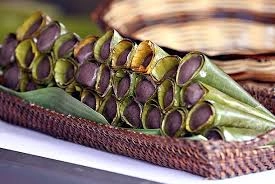
Image courtesy of Sunstar
🍃 Sayongsong — Siargao's Steamed Rice Cake
Sayongsong is a traditional Filipino steamed sweet rice cake served in distinctive cone-shaped banana leaves . It's native to Surigao del Norte and the wider Caraga region , which puts Siargao squarely in its homeland. The cake is made from a blend of glutinous rice and regular rice (traditionally using pirurotong , a native deep-purple glutinous rice that gives it a striking blue-to-purple colour), ground into a smooth paste called galapóng , then mixed with coconut milk sweetened with sugar. A spritz of calamansi juice is added before the mixture is poured into greased banana-leaf cones and steamed for around 20 minutes. The result is dense, slightly chewy, mildly sweet, and unmistakably local. Keep an eye out for it at market stalls and local carinderias.
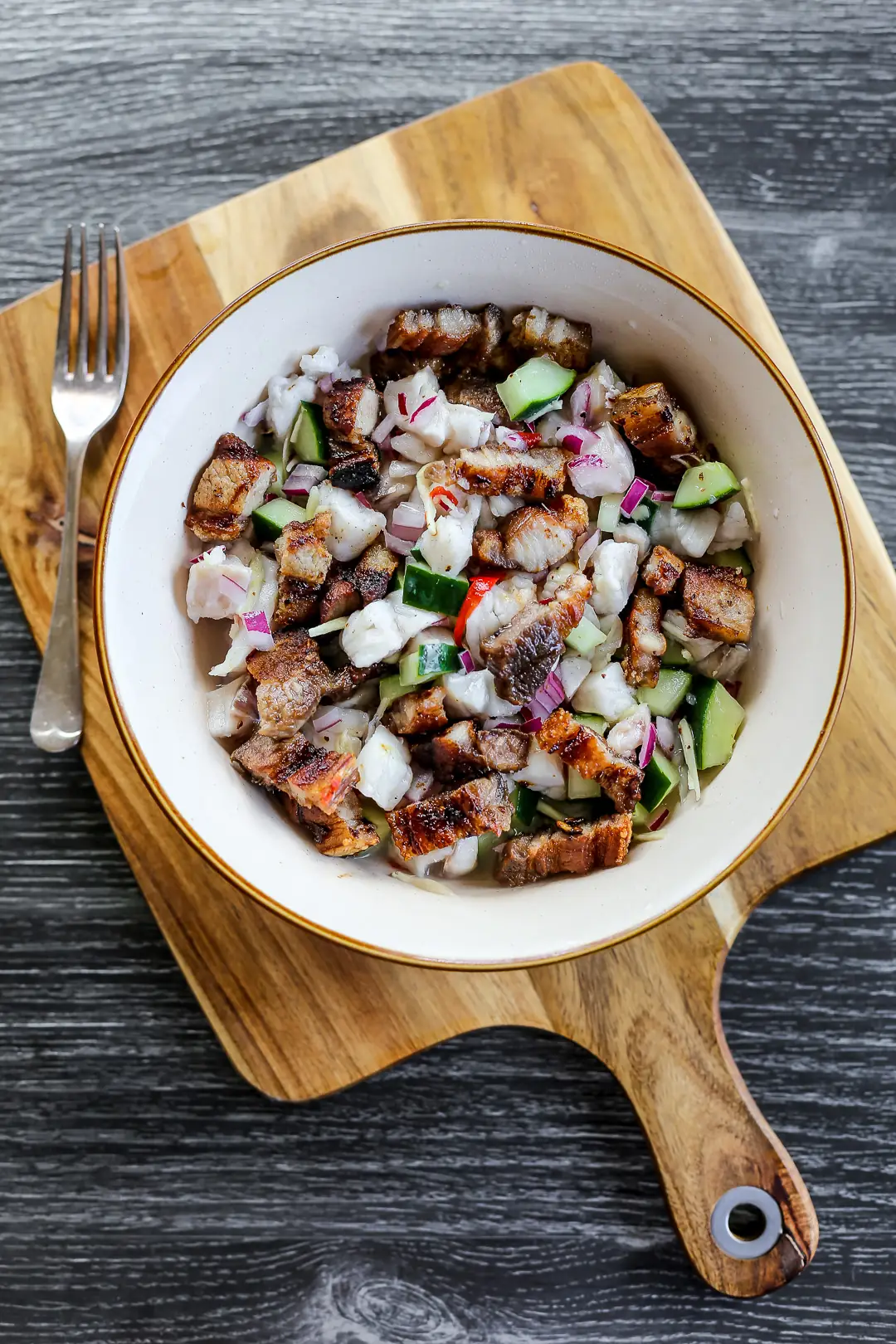
Image courtesy of Ang Sarap
🔥 Sinuglaw — Surf and Turf, Filipino Style
Sinuglaw combines sinugba (charcoal-grilled pork belly, cut into cubes) with kinilaw , the smoky, fatty richness of pork balanced against the acidic, fresh brightness of marinated raw fish. It sounds unconventional but works brilliantly. A distinctly Siargao preparation that perfectly illustrates the island's intuitive approach to contrasting flavors.
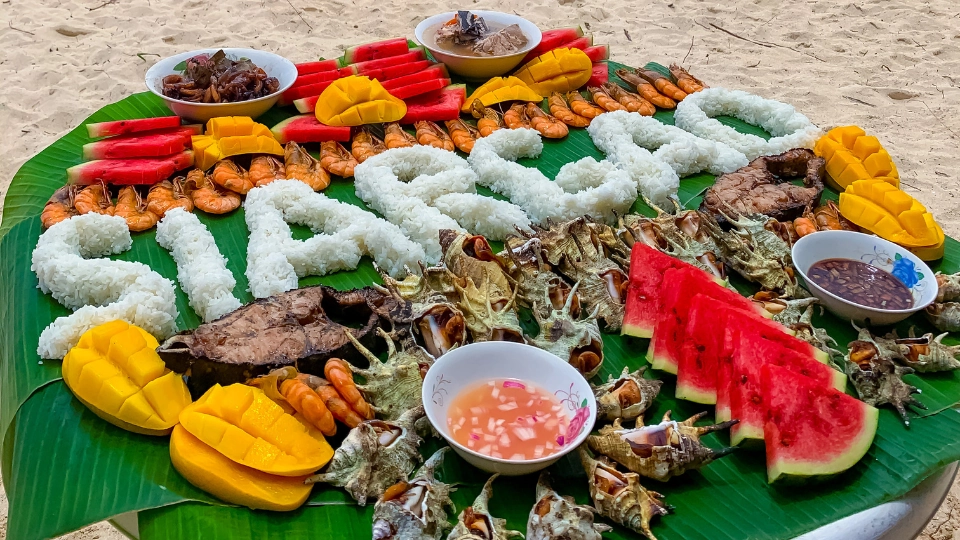
Image courtesy of Siargao Ph
🦑 Fresh Grilled Seafood
Siargao's fishing boats go out daily, and the catch is exceptional. Tuna ( yellowfin and bigeye ), squid, crab, prawns, lapu-lapu (grouper), and bangus (milkfish) are all common. Street-side and market grillers cook these fresh over charcoal, served simply with a soy-calamansi dipping sauce. You'll pay a fraction of what the same quality of seafood would cost in Manila. A large grilled tuna steak in a carinderia might run ₱150 (~$3 USD).
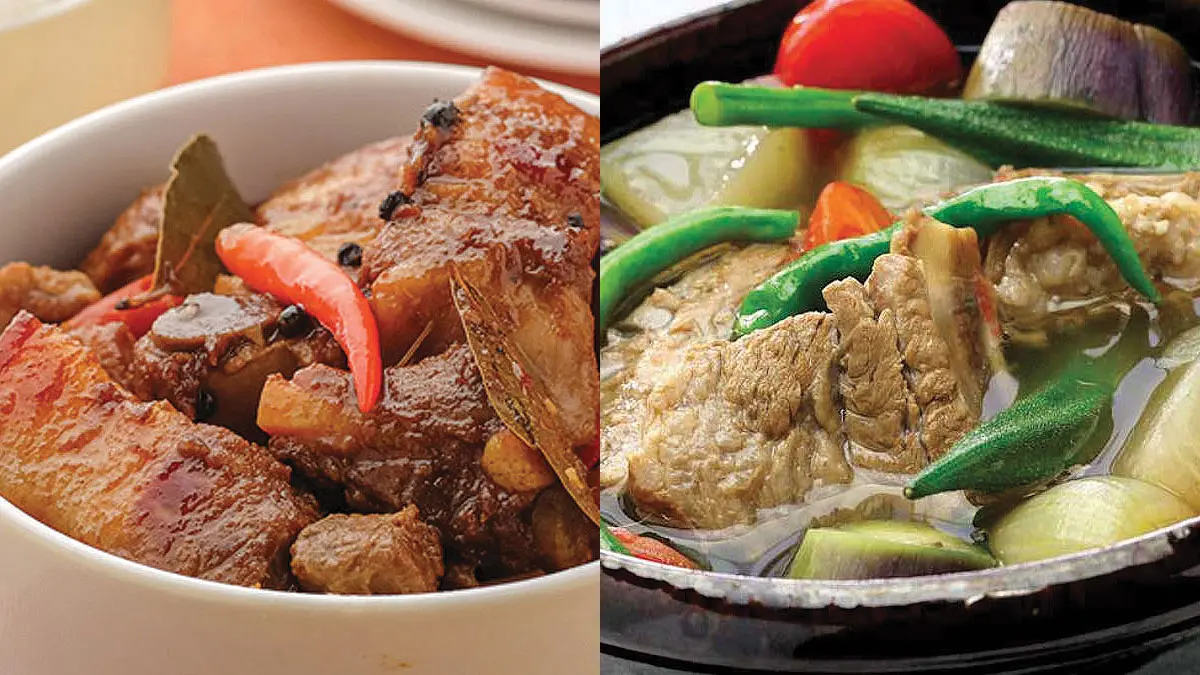
Image courtesy of Pep Ph
🍚 Adobo, Sinigang & Carinderia Classics
Every Filipino household has its adobo, and every carinderia has a pot of it simmering. Pork or chicken braised in vinegar, soy sauce, garlic, and bay leaves until fall-off-the-bone tender, served swimming in sauce over steamed white rice. Sinigang — a tamarind-soured broth with pork, shrimp, or fish and vegetables — is the other staple comfort food of the Filipino table. Both are ubiquitous, both are excellent, and both cost under ₱150 (~$3 USD) in a carinderia.
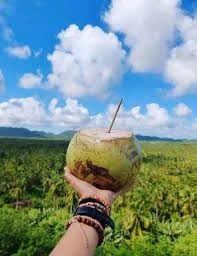
Image courtesy of Siargao Ph
🥥 Buko — The Island Drink
Siargao has coconut palms everywhere. Fresh buko (young green coconuts served whole with a straw, then split open so you can scrape the soft flesh) is the island's unofficial beverage. Buy one roadside for ₱30–50 (~$0.45-$0.75 USD). Many guesthouses and restaurants also make buko juice, buko shake (blended with ice and condensed milk), and various coconut-based desserts. After a long day in the sun, nothing compares.
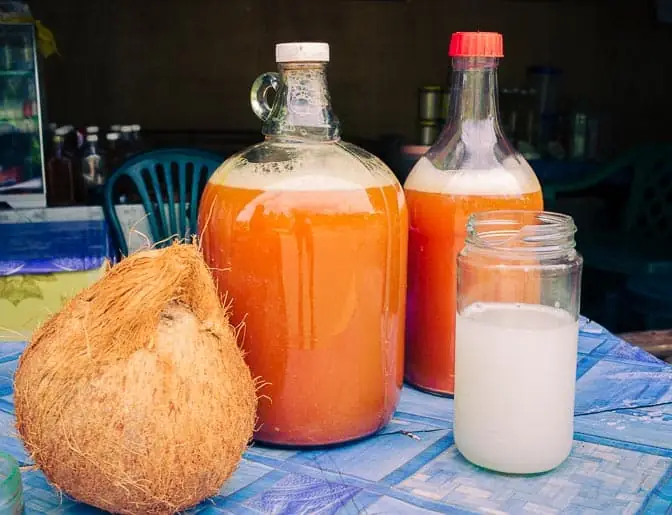
Image courtesy of Food n Road
🍺 Tuba — Coconut Wine
Locally fermented coconut sap, mildly alcoholic (around 4–6%) and slightly sweet-sour with a distinctive yeasty funk. Tuba is best drunk fresh from a local producer. It sours and loses character quickly. You'll see it sold in repurposed plastic bottles at roadside stands, usually in the late afternoon when the day's collection has had time to ferment. An acquired taste, but an authentic piece of Siargao's food culture.
Where to Eat in Siargao — By Area
Your dining options depend heavily on where you're staying in Siargao . The three main eating zones (General Luna, Del Carmen, and Dapa) each have a distinct character.
🏄 General Luna: The Surf Town Restaurant Strip
GL's main road and beachfront strip is where the majority of tourist-facing dining is concentrated. The food scene here has evolved significantly over the past decade, and you can now eat extremely well and extremely badly (at tourist-trap prices) within a few meters of each other. Know what you're walking into:
What you'll find in GL:
- Western-style surf cafés: Pizza (wood-fired at several spots), pasta, burgers, grain bowls, and the ubiquitous avocado toast and smoothie bowls that colonise every surf town globally. Food quality is generally good; prices reflect the tourist premium (₱300–600, ~$5-$10 USD, per main).
- International options: Korean, Japanese, Italian-inspired, and Mediterranean-adjacent menus have all established footholds in GL. Quality varies considerably. Some are excellent, others are thin imitations. Asking other travellers at your accommodation for current recommendations is usually the most reliable approach.
- Local carinderias on side streets: Walk two streets back from the tourist strip and prices drop by half. A carinderia lunch set (rice, adobo or fried fish, a piece of grilled something) will cost ₱100–180 (~$2-$3 USD). These are where local workers eat. Follow the locals.
- Beachfront bar-restaurants: Sunset drinks and meals with a view. Expect a scenery premium on top of the tourist premium. Good for the experience once; expensive for regular dining.
- Breakfast spots: GL has strong breakfast café culture: eggs done multiple ways, local and international options, quality coffee. Budget ₱250–400 (~$4-$7 USD) for a full breakfast with coffee.
Practical tip: GL's restaurant strip gets crowded during peak season (August–November) and December holidays. If you're planning dinner at a popular spot, arrive early (before 6:30pm) or expect a wait. Many places operate on a first-come, first-seated basis.
🌿 Del Carmen: Authentic Filipino Food at Local Prices
Del Carmen 's food scene is primarily local: carinderias, roadside BBQ spots, and small tindahans with ready-cooked Filipino food. This is where you eat tocilog (tocino cured pork + garlic fried rice + fried egg) for ₱80 (~$1.36 USD) and feel like you're actually in the Philippines rather than a Southeast Asian party island.
Options are fewer than in GL, and opening hours are shorter (most carinderias serve lunch 11am–2pm; some open for breakfast). But the food is more representative of everyday Filipino cooking, and the prices are genuinely local. Don't expect cappuccinos, pizza, or a menu in English; this is adobo, sinuglaw, fresh fish, and buko territory.
For guests at Mariden Resort: We can advise on current local options near the resort. Del Carmen's dining scene changes more frequently than GL's, and word-of-mouth from locals is the most accurate compass.
🏪 Dapa: The Local Hub and Best Market
Dapa is Siargao's commercial center and the town that supplies the rest of the island. It's not a dining destination in itself, but it offers two things worth knowing about:
- Dapa Public Market: The best place on the island to buy fresh produce, fish, and local ingredients. The wet market section is most active from 5–10am. Tuna and other fresh fish are sold here at prices significantly below what you'll pay in GL restaurants. If you're self-catering or want to cook, Dapa is essential.
- Local carinderias: Working-class Filipino lunch spots with set meals (rice + 1–2 viand choices) for ₱100–150 (~$2-$3 USD). The clientele is local workers and transport drivers, a reliable indicator of food quality and value. Dapa's carinderias serve food that hasn't been adjusted for tourist palates.
Siargao Food Budget — What to Expect at Each Level
For the complete daily cost breakdown including accommodation, transport, and activities, see our full Siargao daily cost breakdown . Here's how food breaks down specifically:
Budget: ₱400–600/day (~$7–11 USD)
Achievable eating at carinderias and local spots for all three meals.
- Carinderia meal (rice + viand + drink): ₱100–180 (~$2-$3 USD)
- Breakfast tocilog or sinangag with egg: ₱80–120 (~$1.36-$2 USD)
- Barbeque stick (pork or chicken) streetside: ₱20–30 (~$0.34-$0.51 USD) per stick
- Fresh buko drink: ₱30–50 (~$0.45-$0.75 USD)
- Bottled water (1.5L): ₱20–30 (~$0.34-$0.51 USD)
Mid-Range: ₱900–1,500/day (~$16–27 USD)
Mixing local meals with occasional surf café visits and coffees.
- Café breakfast (eggs, toast, specialty coffee): ₱250–400 (~$4-$7 USD)
- Carinderia or local lunch: ₱150–200 (~$3 USD)
- Grilled seafood or pasta dinner at tourist restaurant: ₱400–700 (~$7-$12 USD) per person
- One or two specialty coffees or fresh juices: ₱150–250 (~$3-$4 USD)
High-End: ₱2,000+/day (~$36+ USD) on food alone
Eating at GL's destination restaurants and destination cafés for most meals.
- Destination restaurant set menus: ₱800–2,000+ (~$14-$34 USD) per person
- Premium fresh seafood (large crab, lobster when in season): ₱500–1,500+ (~$8-$25 USD) per piece
- Cocktails at beachfront bars: ₱250–400 (~$4-$7 USD) each
Money tip: ATMs on Siargao are mostly in General Luna and Dapa (none at Sayak Airport itself ) and can run out of cash during peak season and on weekends. Bring enough cash from the mainland for at least 3–4 days. GCash and PayMaya digital payments are increasingly accepted in GL's tourist-facing establishments but rarely in carinderias and Del Carmen.
Vegan & Vegetarian Eating in Siargao
The vegan and vegetarian food scene in Siargao is growing but uneven . General Luna is where plant-based eaters will find the most options; several cafés there offer dedicated vegan menus, and the international food culture in GL means plant-based awareness has followed. Some GL spots offer clearly labeled vegan dishes, tofu-based preparations, and vegetable-forward menus.
Outside GL (including Del Carmen, Dapa, and rural areas), the situation is considerably more challenging. Traditional Filipino cooking is built around pork, chicken, and seafood, and even dishes that appear vegetable-based often contain patis (fish sauce), bagoong (shrimp paste), or lard as a cooking fat.
Key Language for Plant-Based Eaters
When ordering at carinderias or local restaurants, these Filipino phrases help communicate dietary restrictions:
- ☑️ "Walang karne": No meat (but note: fish may still be included)
- ☑️ "Walang isda": No fish
- ☑️ "Walang bagoong": No shrimp paste
- ☑️ "Walang patis": No fish sauce
- ☑️ "Puwede bang walang mantika ng baboy?": Can you cook it without lard?
For strict vegans, combining these phrases covers most bases: "Walang karne, walang isda, walang bagoong, walang patis."
Practical Advice for Vegetarians in Del Carmen
If you're basing in Del Carmen, plan to do grocery runs to Dapa's market for fresh vegetables and fruit. Del Carmen's sari-sari stores have limited produce. Eggs are widely available everywhere and are your most reliable protein source in the Del Carmen area. Tofu is available in Dapa's market.
Coffee in Siargao
General Luna has developed into a genuine coffee destination. Several cafés source and serve single-origin Philippine beans from Sagada (Mountain Province), Benguet, and Bukidnon; the island's surf tourism has attracted the kind of traveller who cares where their beans come from. Pour-over, V60, AeroPress, and quality espresso are all available. Cold brew has become a staple. If you're a coffee person, GL will not disappoint.
Del Carmen is a different story: expect generic 3-in-1 sachet coffee at most guesthouses and carinderias. Mariden Resort offers brewed coffee, but specialty espresso is not available in Del Carmen. If you're staying with us and need your specialty coffee fix, plan your GL day trips to include a café stop.
Wherever you are on the island, buko-based drinks are the universal alternative: fresh buko juice (₱30–50, ~$0.45-$0.75 USD), buko shake blended with ice and sometimes condensed milk (₱50–80, ~$0.85-$1.36 USD), and coconut smoothies are everywhere.
Food Safety in Siargao
Water
Tap water is not potable anywhere on Siargao. Always drink bottled water or use a personal filtration system. Large 5-gallon refillable water jugs (₱15–25, ~$0.25-$0.42 USD) are widely available and the most economical option for longer stays. Most guesthouses and resorts provide either bottled water or access to a large water jug refill service.
Ice
Ice is generally safe in GL's tourist-oriented restaurants and cafés, which use commercially produced ice bags. In carinderias and rural areas, it's worth asking or simply skipping ice and drinking chilled bottled beverages instead.
Seafood
Siargao's seafood is fresh and excellent. Stick to cooked seafood if you have any stomach sensitivity, with the notable exception is kinilaw, which uses acid-marination rather than heat. Choose kinilaw at established places (restaurants, market stalls) where turnover is high and the fish is prepared and served quickly.
Stomach Adjustment
The shift in diet, water, and heat affects some travellers in the first 1–2 days. Bring antidiarrheal medication as a precaution, stay hydrated, and ease into local food rather than diving into the most adventurous dishes on day one. Your digestive system will thank you.
Groceries & Self-Catering
If you're staying somewhere with kitchen access or want to supplement restaurant meals with groceries:
- Dapa Public Market: Best for fresh fish, vegetables, and local produce. Open from early morning; best selection 5–10am. Bring exact change and a reusable bag.
- Minimarkets in Dapa and GL: Packaged goods, snacks, condiments, bottled water, alcohol. GL has larger supermarket-style shops catering to tourists with a broader product range.
- Sari-sari stores in Del Carmen: Basic essentials: bottled water, eggs, packaged snacks, canned goods, and sundries. Selection is limited; plan bigger shopping runs to Dapa.
- Reef-safe sunscreen: Available in GL surf shops at a premium. Bring from home if reef-safe is a priority, since it's more reliable and usually cheaper from Manila or Cebu.
Frequently Asked Questions
General Luna has the widest choice: local carinderias on the back streets for budget eating, and international surf cafés and specialty restaurants for mid-range dining. For the cheapest authentic local food, eat at carinderias in Del Carmen or Dapa. For fresh produce and seafood at market prices, visit Dapa Public Market in the morning. Your base determines your daily rhythm: Del Carmen means mostly local Filipino food; GL gives you far more variety (our Siargao itineraries build in both areas).
The essential dishes are: kinilaw (raw tuna marinated in coconut vinegar and coconut milk), sayongsong (a traditional steamed sweet rice cake in cone-shaped banana leaves, native to the Caraga region), sinuglaw (grilled pork combined with kinilaw), and fresh grilled seafood , tuna, squid, and crab are all excellent and cheap. Fresh buko (young coconut) is the island drink you'll want daily.
Budget travelers eating at carinderias: ₱400–600/day (~$7–11 USD). Mid-range mixing local and café meals: ₱900–1,500/day (~$16–27 USD). High-end eating at GL's destination restaurants: ₱2,000+/day (~$34+ USD) on food alone. See our full Siargao daily cost breakdown for accommodation, transport, and activities costs combined.
Yes, primarily in General Luna, where several cafés offer dedicated plant-based menus. Outside GL (Del Carmen, Dapa, rural areas), options are very limited. Filipino cooking relies heavily on patis (fish sauce), bagoong (shrimp paste), and lard even in vegetable dishes. To communicate your needs: "Walang karne, walang isda, walang bagoong, walang patis" (no meat, no fish, no shrimp paste, no fish sauce).
Kinilaw is a Filipino dish similar to ceviche: raw fish (typically fresh tuna or tanigue) "cooked" by marinating in coconut vinegar and sometimes coconut milk, with ginger, red onion, chilli, and calamansi citrus. The Siargao local style often adds gata (coconut milk) for a creamier, milder result. It's served cold as a pulutan (drinking snack) or as a main with rice. Order it fresh where you can see it's been made that day.
Yes, General Luna has genuine specialty coffee culture , with cafés serving single-origin Philippine beans (Sagada, Benguet, Bukidnon) via pour-over, V60, and espresso. Cold brew is widely available. Del Carmen has very limited coffee options, mostly 3-in-1 sachet coffee, though Mariden Resort offers brewed coffee. Buko (coconut) drinks are the universal alternative everywhere on the island.
Sleep where the local food scene is
Del Carmen's local restaurants and fresh seafood are a short walk from Mariden Resort. Wake up, eat well, then day-trip to General Luna's café strip or the north coast's attractions. Rooms from ₱1,500/night (~$26 USD) with airport pickup available (₱200, bookings of 7+ nights, tricycle only).
Book direct with code DIRECT10 for 10% off.
Explore Our RoomsRelated Guides
Planning & Budget:
- Siargao Budget Guide Complete daily cost breakdown: accommodation, transport, food, and activities
- Siargao Packing List What to bring, including food and health essentials
- Best Time to Visit Siargao How season affects food availability and prices
- Del Carmen vs General Luna Choosing your base and what it means for your food access
Getting Around:
- Getting Around Siargao How to reach GL, Dapa, and the rest of the island from Del Carmen
- Siargao Airport Guide Arrivals, transfers, and what to do on your first day
- Sample Itineraries Day-by-day plans that incorporate food stops
- Things to Do in Siargao Every attraction, tour, and activity beyond the restaurant strip